


EDITOR'S NOTE Meek Sun does not drag an Oddity rabbit hole into the light just to flatten it into an approved answer. This edition presents the theory seriously, shows where the case gets its power and subjects both the alternative and conventional timelines to pressure.
WHAT IF THE YEAR IS WRONG?
Imagine learning that nearly three centuries never happened—that rulers, wars, dynasties, and even Charlemagne were inserted into the record by people powerful enough to move the calendar itself.
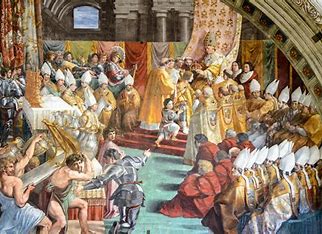
That is the hook behind the Phantom Time Hypothesis. First advanced by German author and publisher Heribert Illig in 1991, it claims that the years AD 614 through 911 were fabricated. In this telling, Emperor Otto III and Pope Sylvester II—sometimes joined by Byzantine emperor Constantine VII—reshaped chronology so Otto could reign in the symbolically potent year 1000.
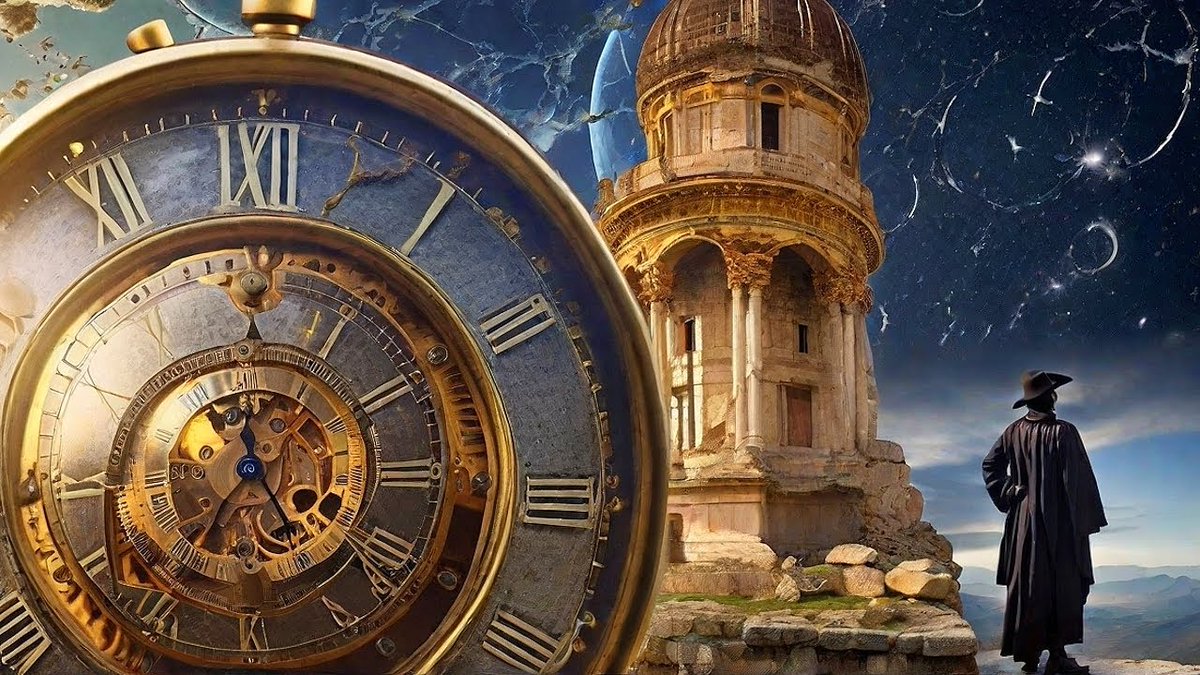
It is an irresistible premise because it turns the calendar—the quietest object in the room—into the scene of the crime.
THE CLAIM.
THEN THE RECEIPT.
Each card starts with the theory's argument. Open it for the pressure point, the counterevidence and what remains worth questioning.
01THE CLAIMThe 297-year insertion
Illig argued that AD 614–911 was added to the calendar and that Charlemagne’s age was substantially invented.
OPEN +
The 297-year insertion
Illig argued that AD 614–911 was added to the calendar and that Charlemagne’s age was substantially invented.
The scale is the theory’s hardest problem
Records across Europe, Byzantium, the Islamic world, and Tang China intersect through trade, diplomacy, war, and astronomy. Any missing-time argument has to explain how those chronologies remain compatible. That does not make the question illegitimate. It defines the burden the theory has to carry.
02THE CLAIMThe calendar clue
Why did the Gregorian reform remove ten days when a count from Julius Caesar’s reform appears to suggest thirteen?
OPEN +
The calendar clue
Why did the Gregorian reform remove ten days when a count from Julius Caesar’s reform appears to suggest thirteen?
The entire dispute turns on the chosen baseline
The conventional answer is that the Gregorian reform restored the seasonal relationship used at the Council of Nicaea in AD 325, not the calendar’s position in 45 BC. That makes ten days the expected correction. The theory treats the missing three days as evidence; mainstream chronology treats Nicaea as the answer. This is the pressure point worth understanding clearly.
03THE CLAIMThe quiet record
Fewer surviving documents and uneven archaeology made the Early Middle Ages look suspiciously empty.
OPEN +
The quiet record
Fewer surviving documents and uneven archaeology made the Early Middle Ages look suspiciously empty.
The thin archive is where the theory gets oxygen
Wars, fire, decay, reuse, and limited literacy brutally thinned the record. Carolingian manuscripts, coins, buildings, burials, artworks, and scientifically dated material still cross the alleged gap, but the uneven survival of evidence helps explain why the period feels suspicious to modern readers.
04THE CLAIMThe sky as a witness
If centuries were inserted, dated eclipses and comet observations should drift away from modern calculations.
OPEN +
The sky as a witness
If centuries were inserted, dated eclipses and comet observations should drift away from modern calculations.
Astronomy is the strongest counterargument
Historical observations across different civilizations align with independently calculated celestial events. Moving the calendar by nearly three centuries should create a serious mismatch in the sky. Supporters of Phantom Time have not resolved that challenge cleanly, which makes celestial evidence the hardest witness to dismiss.
THE PAST LEFT
TOO MANY WITNESSES.
The fatal problem is not one document or one disputed ruin. It is convergence. Independent evidence lands on the same chronology from directions no single medieval plotter could control.
- GLOBAL CHRONOLOGIESEurope's timeline intersects with Byzantine, Islamic, and Tang-era records.
- PHYSICAL EVIDENCECoins, manuscripts, art, structures, burials, tree rings, and radiocarbon sequences cross the alleged gap.
- CELESTIAL EVENTSEclipses and comet sightings correspond to modern astronomical calculations.
- THE CALENDAR ITSELFThe ten-day Gregorian correction properly measures drift from AD 325.
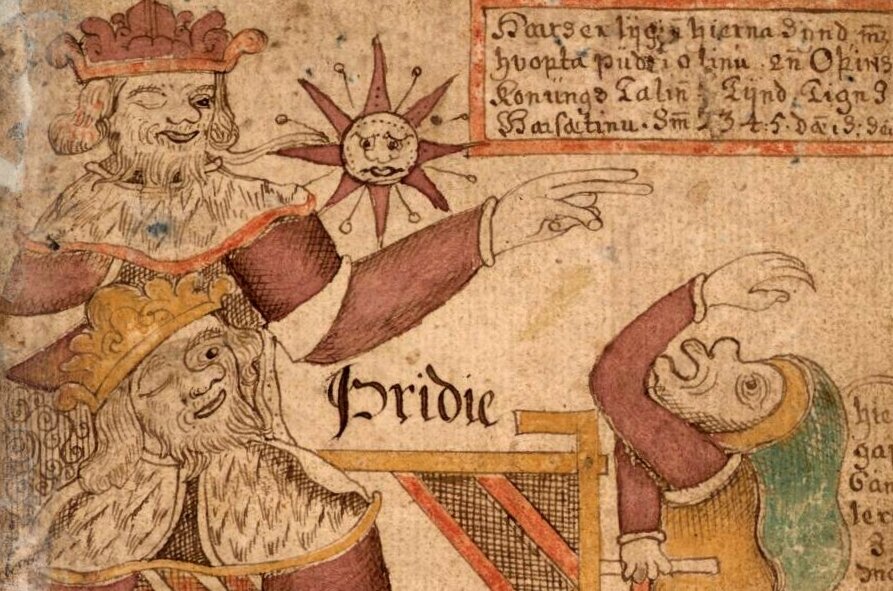

THE CALENDAR IS NOT ABOVE QUESTIONING.
Conventional chronology still carries the stronger combined case: independent civilizations, physical evidence and astronomical observations converge too often for nearly three inserted centuries to fit comfortably.
That does not make the investigation stupid or disposable. Phantom Time exposes how much historical confidence rests on baselines, damaged archives and chains of interpretation most people never inspect for themselves.
QUESTION THE RECORD. QUESTION THE THEORY. NEVER OUTSOURCE THE QUESTION.